
Article: Geometry in Use
Geometry in Use
How a simple geometric idea became a versatile object
Some geometric forms seem timeless. The hexagon is one of them.
When Oki Sato and his studio Nendo designed Hexagon for Quodes, the starting point was remarkably simple: a freestanding column built from six equal sides. Yet this elementary geometric figure evolved into one of the most versatile objects in the collection.
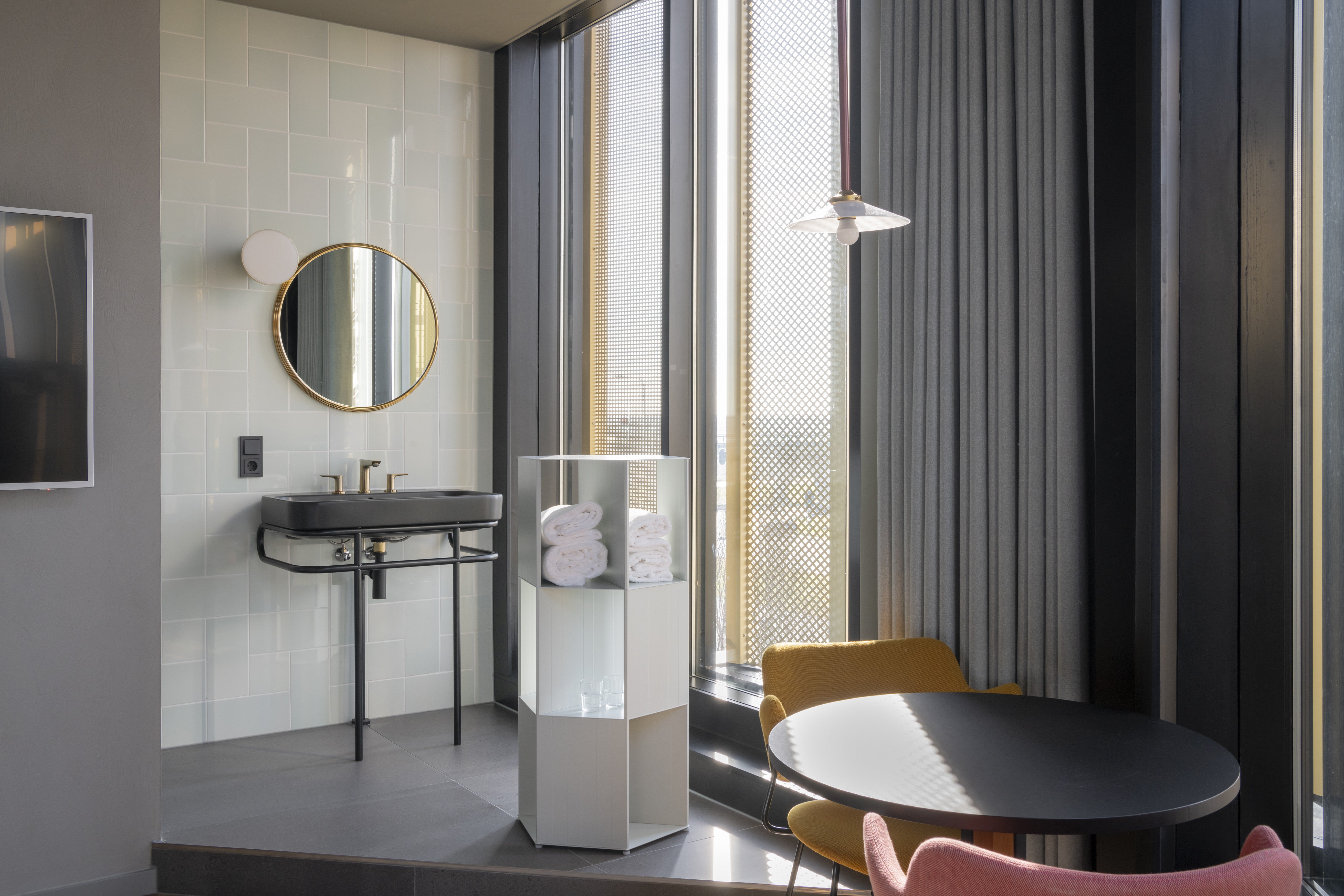
Hexagon is neither a conventional bookcase nor a traditional cabinet. Instead, it occupies a category of its own. Depending on the context, it can function as a side table, display pedestal, bookcase, room divider or sculptural object.
The design is based on stacked hexagonal modules. As the object rises, different openings and perspectives emerge, creating constantly changing views. This subtle play between simplicity and surprise is characteristic of Nendo's work, where small interventions often create unexpected experiences.

What appears simple required considerable development. To achieve the desired strength and stability, Quodes developed a construction using hollow aluminium extrusion panels. These lightweight yet rigid elements form the vertical walls of the object and allow the column to remain remarkably stable despite its open appearance.

The development process itself reflected the international nature of the collaboration. Ideas travelled back and forth in a continuous exchange of sketches, emails and prototypes while Oki Sato moved between projects and cities around the world. The design evolved through an ongoing dialogue between designer, product development and production.
Hexagon's architectural qualities became particularly visible in the suites of Hotel The Florian near Amsterdam Airport. Here, the object was used as a room divider between the sleeping area and the bathroom. Rather than building a wall, the designers introduced a functional object that subtly separates spaces while maintaining openness and visual connection.

Today Hexagon remains one of the most distinctive pieces in the Quodes collection. Not because it seeks attention, but because it quietly combines geometry, architecture and function in a way that feels both unusual and familiar.
A simple geometric figure became a new furniture archetype: somewhere between column, bookcase and architectural object.